
The Launch OpenAI Never Planned
OpenAI's former Head of Sales on the ChatGPT explosion - and how to capture demand you never saw coming.

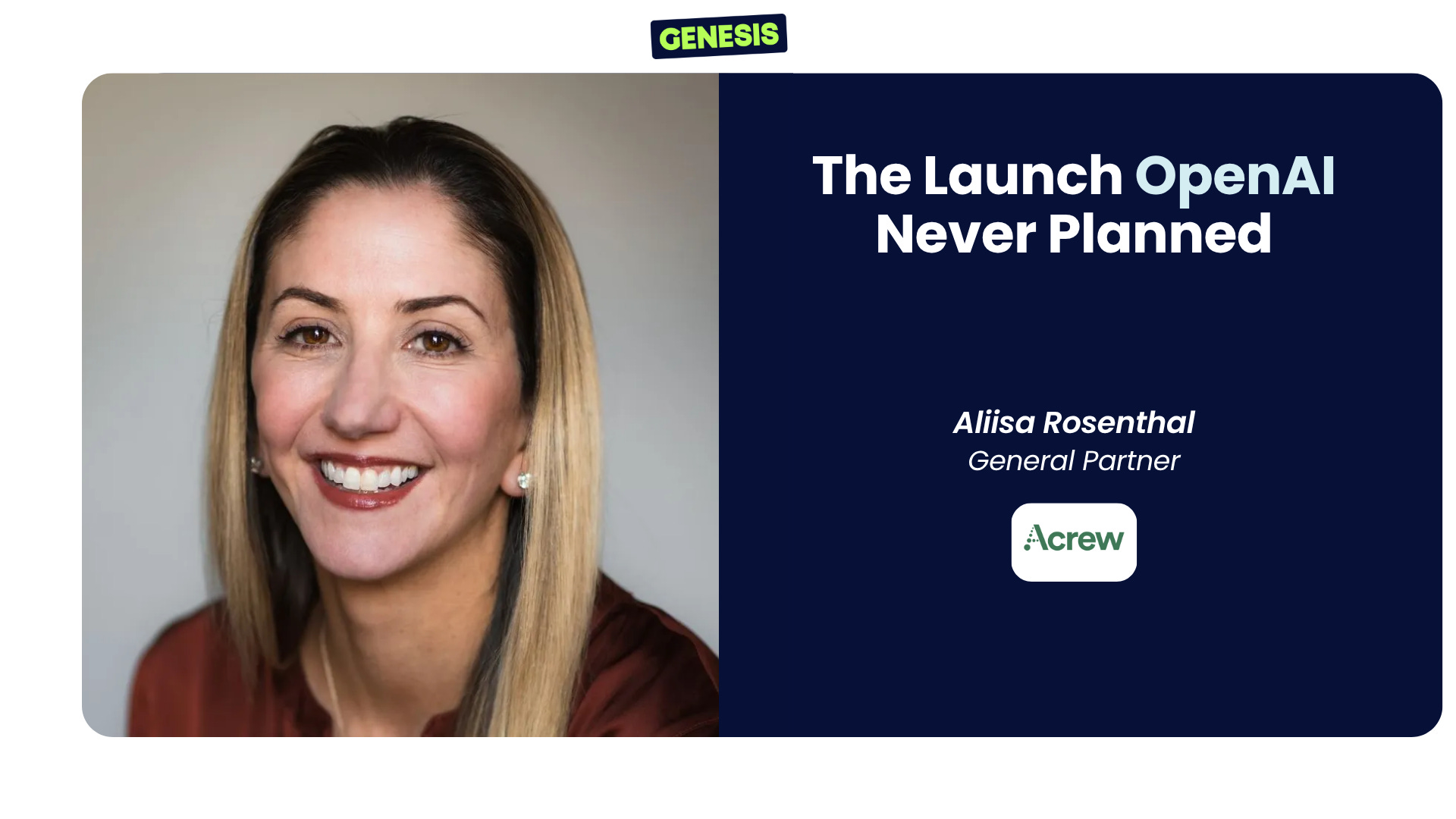
Aliisa Rosenthal is a General Partner at Acrew Capital, a fund of almost $2 billion investing in AI startups, with companies like Discord and Cato Networks in the portfolio. Before that she was Head of Sales at OpenAI - joining when it was a research lab of roughly 200 people, two sales reps, and about $5 million in revenue. Earlier she was VP of Sales at WalkMe, which she helped grow from $50 million ARR through its IPO, and the first sales rep at Mixpanel.
In a session with Genesis TITAN founders, Rosenthal walked through what the ChatGPT moment actually looked like from inside the sales team - improvised, understaffed, and nothing like the orchestrated rollout the world assumed it was.
1. The Biggest Launch in Tech Was a Buried Link
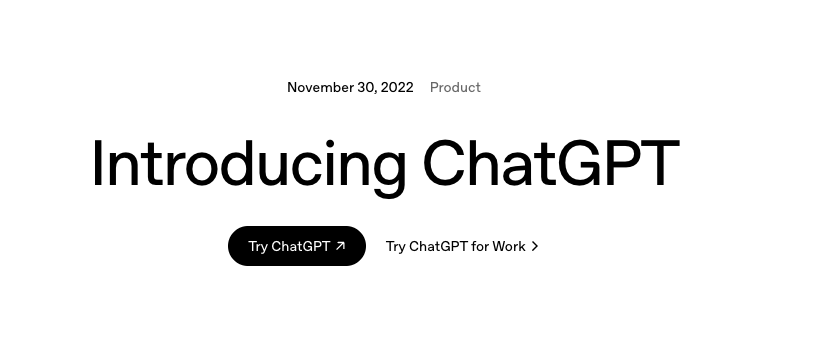
ChatGPT was not a launch strategy. It was an experiment to learn how people converse with GPT-3.5 - a way to prepare the world for GPT-4, which had finished training in August. The night before, an OpenAI exec sent Rosenthal a Slack: “FYI, we’re launching this thing. Shouldn’t really impact your team.”
There was no landing page. The link sat at the bottom of a blog post, buried at openai.com/chat. No emails. One tweet from Sam Altman. Three days later OpenAI was on the cover of The New York Times, then The Tonight Show. Within two weeks, “it felt like everyone on earth had heard of ChatGPT.”
The detail founders should sit with: the same model had been publicly available through the API and playground for nine months.
“If you want only developers to use it, put it in an API. If you want the world to use it, you have to put it in an interface that everybody can access.”
Nothing about the product changed - only the friction. Free, no login, easy to talk to. Sometimes the distribution problem isn’t the product. It’s the doorway.
2. Build the Machine Before the Team
When the wave hit, Rosenthal had five people - one on paternity leave - and thousands of companies reaching out through every channel: LinkedIn, email, voicemail, text. Most of that inbound just sat there, uncaptured. No phone numbers, no business emails, no company data.
“I would kill to have those phone numbers a year later.”
Her lesson, and the advice she now gives portfolio founders: even inbound you can’t serve today is a goldmine for later. Capture the data with a thoughtful form. Set up automated touchpoints - videos, blog posts, surveys, roadmap check-ins - so people feel someone is there.
“Build the machine before the team. You can always bolt on people later, but people are expensive.”
Systems first, headcount second. Hero mode does not scale.
3. The $20 Million Deal You Should Turn Down
At peak, a huge enterprise called wanting to sign a $20 million deal on the spot - with no use case. “I just wanna make a press release that I’m doing a $20 million deal with you.” She pushed back. OpenAI made money on API token consumption, and a deal with nothing behind it was a mess waiting to happen.
“Don’t let giant enterprises come in and take all of your resources and dictate your roadmap.”
She learned this the hard way: Her first big enterprise customer, consumed 90% of her internal resources. Great logo, real cost. So she built a simple matrix - how many tokens will you consume, and how hard are you to work with - and called the discipline ruthless prioritization. That’s how Intercom’s Fin became one of her first bets in December 2022: a real vision, a token-heavy use case, easy to work with. Days before this session, Salesforce acquired Fin - and a Fin AI lead from Intercom sent her a thank-you note.
One side effect of saying no: when she told a client she couldn’t get through their procurement, they responded by offering to skip their own processes. “When you say no to a customer, I swear it just makes them want your product more.”
4. You Can Always Discount - You Can Never Raise the Price
At Mixpanel, twelve years ago, a large organization came inbound to a company that was purely SMB and product-led. Rosenthal asked herself the highest price she could possibly charge and landed on $200K. They said okay - instantly. The deal then devoured months of her time and multiple trips to New York. When it closed, her champion told her over a beer: “You know, you could have charged me five to six times as much.”
“Charge them 10 times more than you think you should, because they will make you work for it, and they will make it worth it. You can always discount and back down from it, but you can never raise the price once you throw it out.”
Enterprise deals are priced once. Anchor high, treat the first big customer as a design partner, and pick one that’s a tastemaker for your ICP. The price you blurt out in the first meeting is the ceiling forever.
Love it, Aliisa is awesome!